
Serving Bellingham and Nearby Whatcom County Communities
Siding Installation, Replacement, and Repair in Bellingham, WA
North Sound Siding Co. is an online resource that helps Bellingham area homeowners explore siding solutions for exterior damage, aging materials, moisture concerns, and home improvements. Whether you're dealing with failing finishes, warped panels, or just want to update your home's exterior, you can submit your project information and request an estimate to get started.
Bellingham-Focused Siding Information
Siding guidance written for homeowners in Bellingham and nearby Whatcom County communities.
Multiple Siding Materials
Explore fiber cement, vinyl, cedar, and wood siding options side by side.
Simple Online Estimate Requests
Submit your project details online and we'll work to connect you with an independent siding professional.
Is Your Home's Siding Showing Its Age?
Older siding in the Pacific Northwest can deteriorate in several ways, and catching problems early can limit the damage. Here are some of the most common signs homeowners notice before reaching out for an assessment.
- Cracked or loose siding panels: Cracks allow water to enter the wall assembly, and loose panels can shift or separate over time.
- Warped or buckled materials: Warping often signals moisture exposure or improper installation, and the affected area may extend beyond what's visible.
- Soft or rotting wood: Soft spots in wood or engineered wood siding may indicate moisture has penetrated behind the surface.
- Peeling or failing finishes: Paint or factory finishes that are peeling or chalking can leave the underlying material exposed to weather.
- Visible moisture damage: Staining, discoloration, or mold growth on the exterior may point to drainage or flashing problems.
- Faded or outdated materials: Heavily faded siding affects curb appeal and may signal that protective coatings have broken down.
- Increasing maintenance needs: If the same sections keep requiring attention, it may be worth evaluating whether the material is nearing the end of its practical life.
- Damage around windows, doors, trim, and penetrations: The edges and transitions in a home's exterior are among the first places moisture intrusion shows up.
Some problems may be repairable while widespread deterioration may make replacement more practical. A proper inspection by a qualified professional is the only way to assess what's actually happening behind the surface. We don't diagnose any property remotely.
Siding Services for Bellingham Homeowners
Service
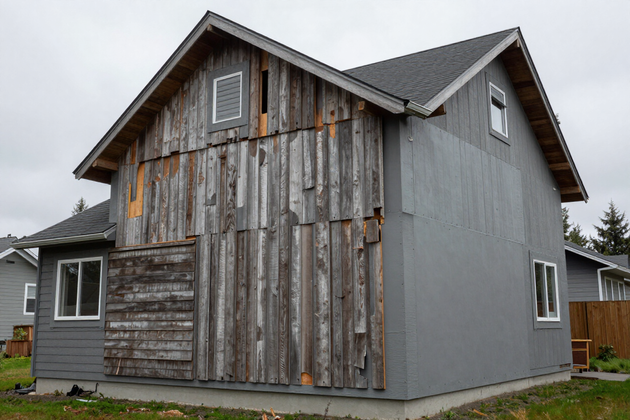
Siding Replacement
When damage, deterioration, or maintenance problems affect a significant portion of your exterior, replacement may be the more practical path. We can help you explore material options and submit a project request.
Service
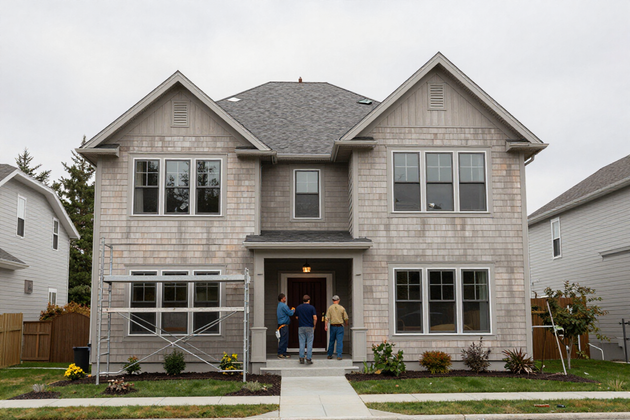
Siding Installation
Whether you're building new, adding on, or updating an aging exterior, siding installation covers the full process, material selection, profile choices, weather barriers, and exterior trim.
Service
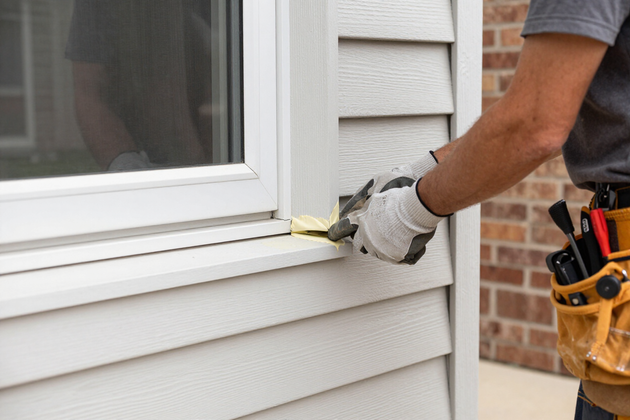
Siding Repair
Cracks, loose panels, localized rot, failed caulking, and impact damage may not require a full replacement. Submit the details and we'll help you figure out the right next step.
Siding Selected With Northwest Weather in Mind
Bellingham's climate of persistent rain, cool temperatures, and limited drying days puts consistent pressure on exterior building materials throughout the year.
- Rain and repeated moisture exposure: Bellingham receives consistent rainfall throughout most of the year, so exterior materials are regularly wetted and must shed water reliably.
- Drainage and drying behind exterior cladding: A properly designed wall assembly includes a drainage plane behind the siding so water that does penetrate can drain away rather than accumulate.
- Proper flashing around windows, doors, and penetrations: Flashing at openings and transitions is critical in a wet climate; missing or failed flashing is one of the most common pathways for moisture intrusion.
- Water-resistive barriers behind the siding layer: A weather-resistive barrier between the sheathing and siding adds a secondary layer of protection if water gets past the outer cladding.
- Sealing appropriate joints and exterior transitions: Properly sealed horizontal joints, butt ends, and material transitions help prevent water from tracking behind the siding.
- Ventilation and wall-system airflow considerations: Some wall assemblies benefit from a ventilated cavity behind the cladding to promote drying when moisture does get in.
- Maintenance requirements by material type: Every siding material has maintenance requirements; the frequency and type vary. Understanding what a material needs before selecting it helps avoid surprises later.
- Recognizing early signs of moisture intrusion: Bubbling paint, soft spots, staining at the bottom of panels, or musty odors inside can all suggest moisture is moving through the wall assembly.
Siding alone does not completely waterproof a house. The complete exterior wall system, including the substrate, weather barrier, flashing, and fastening, all contribute to how well the assembly performs over time. Correct installation details matter as much as material selection.
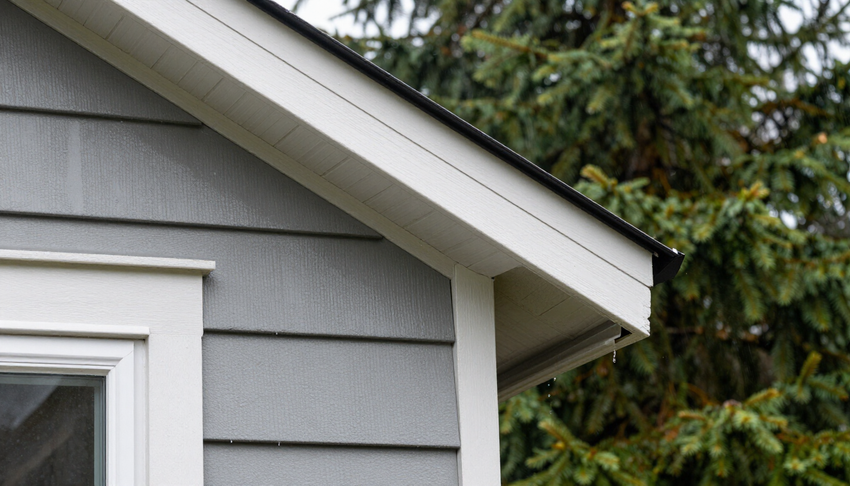
Siding Material Options for Northwest Homes
The right siding material depends on your home, your budget, your maintenance preferences, and how the exterior is designed. Here's an overview of the three most common options for Bellingham homes.
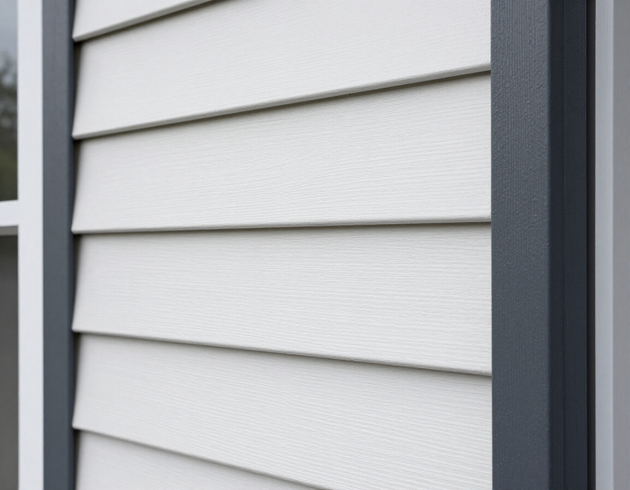
Material
Fiber Cement Siding
Fiber cement is a durable composite available in lap, vertical panel, and shingle profiles, making it versatile for a range of Northwest home styles. It holds paint well and resists rot and warping when properly installed and maintained. The material is heavier than vinyl and requires careful installation details particularly at joints and penetrations to perform well in a wet climate. Periodic repainting is required; fiber cement is not maintenance-free.
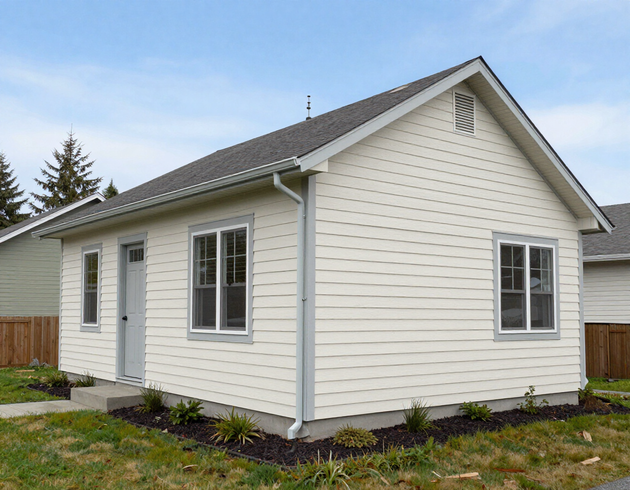
Material
Vinyl Siding
Vinyl siding offers a broad selection of colors and profiles, with lower routine painting requirements than wood or fiber cement. The material expands and contracts with temperature changes, so proper installation is important for long-term performance. Product quality varies widely across the market, and vinyl is not impervious to impact damage. Choosing a reputable product and having it correctly installed makes a significant difference in how it holds up over time.
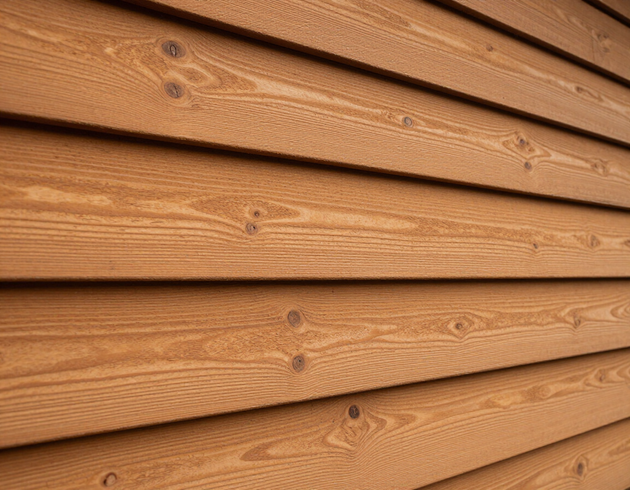
Material
Cedar and Wood Siding
Cedar and wood siding offer a natural appearance and architectural character that suits many Pacific Northwest homes. Both can be stained or painted in a range of finishes to match a variety of exterior styles. Wood siding requires regular maintenance, staining or painting on a recurring cycle especially in a wet climate like Bellingham's. Localized rot can often be repaired when caught early, but ongoing upkeep is an important part of owning wood siding.
No single material is the right choice for every home. The best option depends on your home's design, your budget, your long-term maintenance preferences, and the scope of your project.
Does Your Siding Need Repair or Replacement?
The difference isn't always obvious from the outside. Here's a practical guide to help you think through the question before requesting an estimate.
Repair May Be Appropriate When:
- Damage is limited to a small, defined area
- Replacement materials can be matched to the existing siding
- The underlying wall assembly remains in good condition
- The rest of the siding still has useful service life remaining
Replacement May Be Worth Considering When:
- Deterioration is widespread across the exterior
- Moisture problems appear in several areas
- Original materials are no longer available for matching
- Maintenance has become frequent or increasingly costly
- The homeowner wants to update the entire exterior appearance
- Multiple repairs would only delay a more significant project
The only way to know for certain what your siding needs is a proper evaluation of the exterior. Submit your project details and we'll work to connect you with an independent professional who can assess the condition of your home.
What New Siding Can Improve
New siding can address practical problems, but realistic expectations matter. The benefits depend on the material chosen, the condition of the existing exterior, and the quality of the installation.
- Updated exterior appearance: New siding refreshes the look of an aging home and allows you to update trim colors and exterior details at the same time.
- Better protection for the wall assembly: When installed correctly with appropriate flashing and a water-resistive barrier, new siding helps protect the structure behind it.
- Reduced maintenance depending on the material: Some siding materials require less frequent attention than others; maintenance requirements vary by product type and local conditions.
- Replacement of damaged or deteriorated materials: New siding removes the problem material and gives the exterior a consistent, sound starting point.
- More consistent exterior appearance: Replacing mismatched repairs or original materials from different eras can unify the home's exterior.
- Opportunity to update trim and exterior details: A siding project is often a practical time to address fascia, soffit, window trim, and other exterior elements.
- Improved comfort when insulation work is included: If the project scope includes additional insulation or air-sealing work, comfort may improve, though this depends on the scope and existing conditions.
Specific outcomes, including energy performance and resale value, depend on many factors beyond the siding material itself. We don't make those guarantees here.
How the Estimate Request Process Works
Submitting a request takes only a few minutes here's what to expect after you do.
01
Tell Us About Your Siding Project
The homeowner submits information about the property and current siding concerns using the online form.
02
Review Your Project Needs
The project type, location, material interests, timeline, and other details are reviewed.
03
Connect With a Siding Professional
The homeowner may be connected with an independent professional who serves the project location. Availability is not guaranteed.
04
Receive and Evaluate Your Estimate
The homeowner can discuss options, scope, materials, availability, and pricing directly with the provider.
Submitting a request does not guarantee an appointment, estimate, or acceptance of the project.
Siding Styles and Exterior Inspiration
The images below show siding styles, exterior profiles, and finish options. They are presented as inspiration examples — not as completed North Sound Siding Co. projects.

Fiber Cement Lap — Cool Gray

Mixed Material — Dark Lap and Cedar Shingles

Craftsman Horizontal — Warm Cream

Trim Detail — Fiber Cement Surround

Board-and-Batten Accent

Vinyl Horizontal — Warm Taupe

Cedar Horizontal — Honey Stain

Neighborhood Exterior — Complementary Finishes
Serving Bellingham and Whatcom County
Project requests may be submitted from Bellingham and the surrounding Whatcom County communities listed here. Bellingham is the primary focus area. Provider availability may vary depending on the project location and the independent professionals serving that area.
- Bellingham
- Ferndale
- Lynden
- Blaine
- Birch Bay
- Sudden Valley
- Everson
- Nearby Whatcom County Communities
Frequently Asked Questions About Siding
Answers to common homeowner questions about siding repair, replacement, materials, and how the estimate request process works.
How do I know whether my siding needs repair or replacement?
The scope of damage matters most. Localized problems — a few cracked boards, a damaged section near a window — may be repairable. Widespread deterioration, moisture appearing in multiple locations, or materials that can no longer be matched often point toward replacement. A professional inspection of the full exterior is the only reliable way to assess the actual condition of your siding.Which siding materials work well in Bellingham's wet climate?
Fiber cement and quality vinyl both perform well in wet conditions when properly installed. Cedar remains a common and attractive option in the Pacific Northwest, but it requires more maintenance and ongoing care — particularly with finishing and regular inspections. Regardless of material, the installation details matter as much as the product itself: proper flashing, a water-resistive barrier, and drainage behind the cladding all affect how well any siding performs over time.How much does siding replacement cost?
Costs vary significantly based on home size, the existing materials to be removed, the condition of the wall assembly, the new material selected, trim and soffit work, and labor in the local market. Without inspecting the property, a meaningful estimate cannot be provided. Submit a project request and we'll work to connect you with an independent professional who can provide a project-specific estimate.How long does siding installation usually take?
Timeline depends on home size, the material being installed, weather conditions, and how much preparation work is needed. A siding project can range from a few days to several weeks depending on scope. Scheduling and timing should be discussed directly with the provider — we can't provide specific timeline guarantees here.Can damaged siding be repaired without replacing everything?
Yes, in many cases. Localized cracks, loose panels, impact damage, and small areas of rot can often be addressed without a full replacement — as long as the surrounding material is in acceptable condition and the right materials can be matched. If damage has spread or moisture has penetrated the wall assembly, more extensive work may be needed. A professional assessment can help clarify the scope.Does old siding need to be removed first?
It depends on the project scope, the existing material, and the wall conditions. Some projects involve installing over existing siding; others require full removal to address the substrate, flashing, or drainage plane. A professional assessment of the existing exterior is needed to determine the appropriate approach for your specific situation.What is the difference between fiber cement, vinyl, and cedar siding?
Fiber cement is a durable composite that holds paint well and resists rot and impact; it requires periodic repainting and careful installation details. Vinyl offers lower painting maintenance than wood or fiber cement, but quality and impact resistance vary widely by product. Cedar is a natural material with great character but requires the most ongoing maintenance — especially in a wet climate like Bellingham's. You can learn more on the dedicated material pages: fiber-cement-siding, vinyl-siding, and cedar-wood-siding.Can new siding match an existing section of my home?
Matching is possible in some situations — particularly for smaller repairs — but it depends on whether the same profile, color, and material are still available. Older materials are sometimes discontinued, which can make exact matching difficult. A professional can advise on what matching is realistic before any work begins.What information should I include with my estimate request?
Include the property address, the current siding material, the type of project you're considering (repair, replacement, or new installation), a description of any visible problems, your approximate timeline, and any photos you can provide. The more specific you can be, the better equipped a provider will be to follow up with relevant information.What areas do you serve?
Project requests may be submitted from Bellingham, Ferndale, Lynden, Blaine, Birch Bay, Sudden Valley, Everson, and nearby Whatcom County communities. Provider availability varies by location and project. Visit the Service Areas page at /service-areas for more information.
Thank you! Your request has been received. We'll review your project details and work to connect you with an independent siding professional who serves your area.
Ready to Explore New Siding for Your Home?
Fill out the form below with your project details. We'll review the information and work to connect you with an independent siding professional who serves your area. There is no obligation to proceed, and submitting a request does not guarantee provider availability, pricing, or project acceptance.